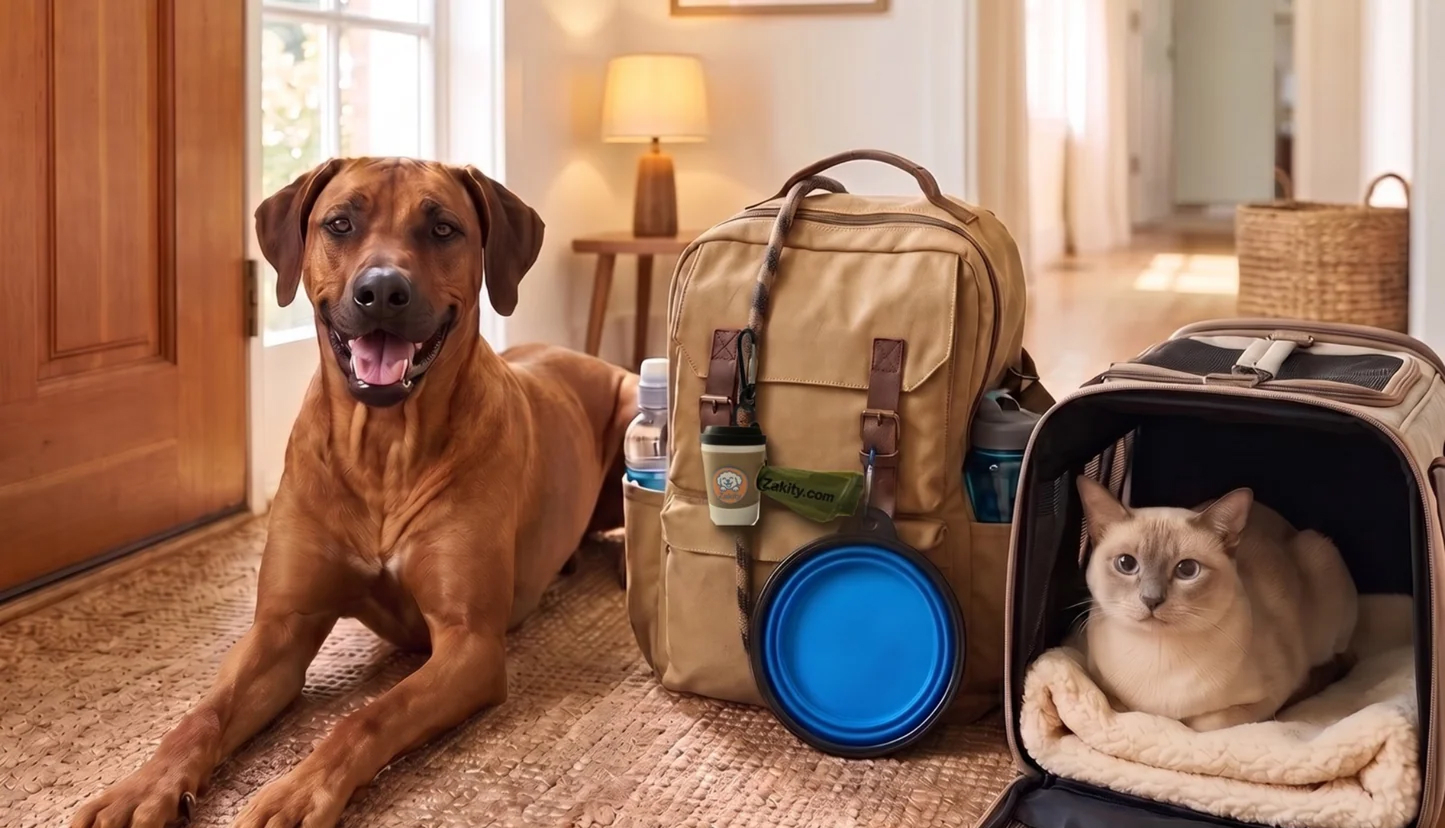
Smoke, flooding, a gas leak or a building evacuation does not wait while you search for the carrier hidden behind winter clothes.
Pet preparedness sounds excessive until the moment you must leave quickly.
Imagine the emergency bag sitting beside the exit. Instead of treating it like one long shopping list, walk through what must be beside it, attached to it and packed inside it.
Beside the bag: safe transport
For a cat or small animal, use a secure carrier that can be reached quickly. For a dog, keep a sturdy leash, harness and backup restraint with the kit.
Check that closures work and that the pet’s name and your contact information are attached.
Do not introduce the carrier only during stressful events. Leave it accessible occasionally with familiar bedding or treats so it does not always predict a frightening trip.
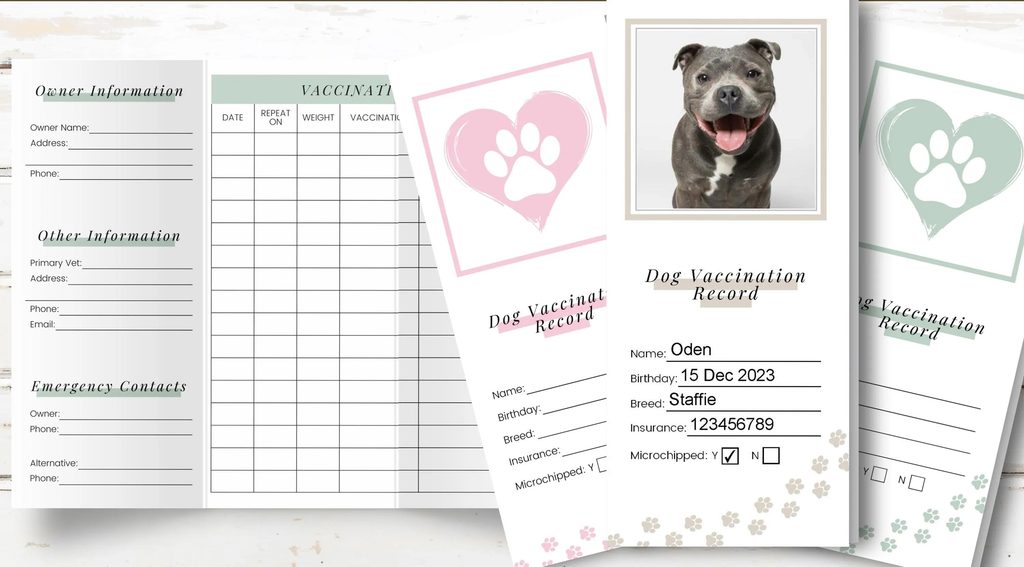
In the waterproof envelope: identification
Include:
- Recent photo of the pet
- Photo of you with the pet
- Microchip number and registry contact
- Vaccination records
- License information where required
- Your phone number
- Contact outside your immediate area
Keep paper copies in a waterproof pouch and protected digital copies you can reach if your phone is lost.
Update the microchip registry whenever your phone number or address changes.
On your phone: somewhere safe to go
Do not assume every hotel or emergency shelter accepts animals.
Write down several options:
- Pet-friendly accommodation
- Friend or relative outside the immediate area
- Boarding facility
- Veterinarian
- Local animal-control or shelter contact
Create a buddy plan with someone who can reach the pet if you are away from home. Give that person clear written instructions and authorized access.
Inside the main compartment: daily survival
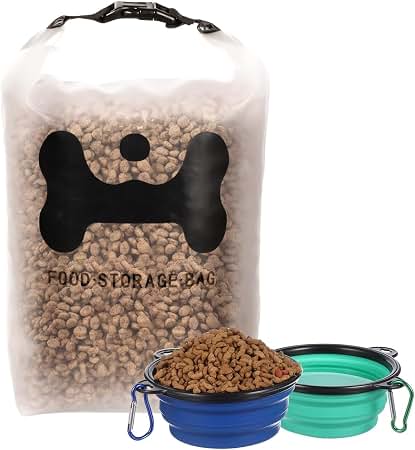
Pack several days of food and water in secure containers, plus a bowl and manual can opener if needed.
Add:
- Medication and dosing instructions
- Prescription copies
- Basic first-aid supplies recommended by your veterinarian
- Waste bags, litter and a compact tray
- Familiar blanket or toy
- Cleaning supplies
Rotate food, water and medication before they expire. Add a recurring reminder to inspect the kit.
In the front pocket: instructions another person can use
If somebody else must care for your pet, they should not need to guess.
Include:
- Feeding schedule
- Medication times
- Known medical conditions
- Behavior around strangers and animals
- Hiding places or escape behavior
- Veterinarian details
- Emergency decision contact
Keep the language direct. In an emergency, clarity matters more than a perfect design.
Run a two-minute test
Can you locate the carrier, place the animal inside and pick up the bag within two minutes?
If not, change where the items are stored. A complete kit at the back of a crowded storage room may be less useful than a smaller kit beside the exit.
Adjust the plan to the animal
A nervous cat may hide when alarms sound, so know the usual hiding places and block unsafe escape routes before attempting to catch them. A large dog may need a second handler. Birds, reptiles, rabbits and fish require species-specific transport and temperature planning.
Households with several animals should decide who handles each one. Do not assume one person can carry multiple carriers, the emergency bag and personal supplies at the same time.
Ask your veterinarian what medical information, food, temperature controls or handling equipment your animal may need. Add those instructions to the one-page care sheet.
Keep the plan usable
Review the bag twice a year. Replace expired items, update photographs and test the carrier closures. A forgotten kit gradually becomes a bag of old food, outdated phone numbers and medication that can no longer be used.
Your pet does not need an elaborate survival system. They need a practiced way out, reliable identification and enough supplies to stay safe while the family finds the next step.
Source
- Ready.gov, preparing pets for disasters: https://www.ready.gov/pets
Discuss medication and medical supplies with your veterinarian. Emergency needs differ by species and health condition.