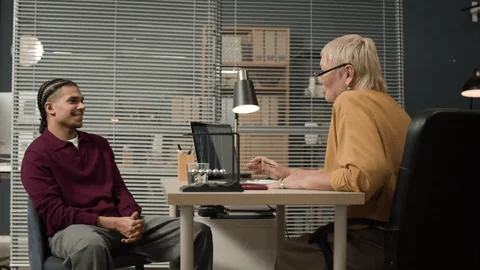
My boss never wrote down the dangerous instructions.
She gave them beside the coffee machine.
In empty meeting rooms.
Once, in the elevator between floors.
“Skip the approval step,” Vanessa told me. “We need speed.”
When the client complained, she stared at me during the team meeting.
“Why would you bypass the review?”
I thought she was joking.
She was not.
“You told me to.”
Her eyebrows rose.
“I would never tell an employee to ignore policy.”
Everyone looked at me.
I tried to remember the exact conversation.
The elevator doors.
The folder in her hand.
Her words.
But memory looked weak beside her confidence.
Afterward, she called me into her office.
“You need to take responsibility,” she said.
“For your instruction?”
“Be careful, Nina.”
That evening, I opened a blank document and wrote down everything I remembered.
The date.
The time.
The people nearby.
Then I made a decision.
Every verbal instruction would receive the same email subject line.

CONFIRMING TODAY’S PRIORITIES.
Useful to know
A useful workplace record describes dates, words, witnesses, instructions and impact. Avoid diagnosing someone as “toxic” in a formal report. Confirm important verbal directions in a neutral email and follow company rules for handling confidential information.
The first email was simple.
Confirming today’s priorities: I will delay the standard quality review and send the draft directly to the client by 4 p.m. Please correct me if I misunderstood.
Vanessa did not reply.
The next week, she told me to remove an unfavorable number from a report until the team could “validate it.”
I sent another email.
She replied with one word.
Proceed.
Soon, the subject line appeared again and again.
Confirming today’s priorities.
Confirming today’s priorities.
Confirming today’s priorities.
Sometimes Vanessa corrected my summary.
That was fine.
The instruction became clear.
Usually, she did not.
Three months later, a serious problem reached the regional director.
A client had received a proposal without the required financial review.
Vanessa called an emergency meeting.
“Nina chose to send it,” she said.
This time, I did not argue from memory.
“I sent a confirmation after you instructed me to bypass the review.”
Vanessa smiled.
“Do you have a reply from me?”
I did.
Proceed.
Her smile remained, but her eyes changed.
“That could refer to anything.”
So I opened the full thread.
The original message named the client, document and skipped review.
The room went silent.
The regional director postponed the discussion and involved HR.
During the HR meeting, Vanessa said my emails were part of a campaign to trap her.
The HR representative searched the subject line.
Twenty-three messages appeared.
She opened them one by one.
In several, Vanessa had corrected a detail.
In nine, she had replied “approved,” “yes” or “proceed.”
In others, she had ignored the summary and later blamed the team when the decision caused trouble.
The emails did more than prove one instruction.

They revealed a system.
Vanessa made risky decisions privately.
If they worked, she took credit for being decisive.
If they failed, the employee had supposedly misunderstood.
Then HR opened the earliest email.
The one I wrote after the elevator meeting.
I had not sent it.
It remained saved as a draft because I was too frightened at the time.
“Why didn’t you send this?” the representative asked.
“Because she told me to be careful.”
Vanessa leaned forward.
“That is not what I meant.”
“What did you mean?”
She could not explain.
Useful to know
Use approved reporting channels when conduct affects safety, discrimination, retaliation or serious policy issues. Recording conversations may be restricted by law or policy. A factual log and ordinary written recaps are often safer than secret recordings.
The company did not fire Vanessa that day.
Real workplaces rarely resolve themselves in one dramatic moment.
She was removed from client approvals while the review continued.
Our team received written assignment and review procedures.
I was transferred to another manager.

Two months later, Vanessa left the company.
Nobody told us whether she resigned or was asked to go.
By then, I no longer needed the answer.
I had spent months believing I was forgetful, oversensitive or bad at following instructions.
The emails showed something else.
I had followed the instructions too well.
The subject line was boring.
That was why it worked.
It did not accuse.
It did not threaten.
It simply asked reality to remain the same after the meeting ended.
Next story: Nina’s emails protected her from a manager who rewrote the past. The next employee had excellent reviews and a promised promotion—until a folder left on the printer revealed the decision had been made before her interview.