The email arrived nine days after I moved out.
Deposit returned: $0.
Below it was a list.
Wall repainting: $900.
Carpet replacement: $1,100.
Deep cleaning: $450.
Broken bathroom cabinet: $350.
The total was exactly $2,800.
My entire deposit.
I read the list three times.
The apartment had been clean.
The carpet was old but intact.
The bathroom cabinet had a loose hinge that existed when I moved in.
And the only marks on the walls came from ordinary furniture placement.
I called the landlord, Mrs. Denning.
“I have invoices,” she said before I finished speaking.
“For a full carpet replacement?”
“It was ruined.”
“You told me it looked fine.”
She laughed softly.
“I would never say that before a professional inspection.”
But she had.
And my phone had heard her.
On move-out day, I recorded a video while walking through every room.
Mrs. Denning had arrived halfway through.

I asked if she minded appearing in the video.
She waved toward the camera.
“Record whatever you want. There’s nothing to hide.”
Now I opened the file.
At 4 minutes and 12 seconds, she stood in the living room.
“The walls look good,” she said.
At 6 minutes, she pressed her shoe against the carpet.
“Normal aging. I planned to replace this next year anyway.”
At 8 minutes, I showed her the cabinet hinge.
“That was already loose when you came,” she replied.
There it was.
Every charge, answered in her own voice.
Useful to know
Before moving out, photograph and video each room in good light, including floors, appliances, fixtures and keys. Keep move-in records too. Ask for an itemized deduction statement and check local rules because deposit deadlines and allowable charges vary.
I did not send the entire video immediately.
First, I organized everything.
The move-in checklist showed the cabinet hinge.
An email from my first month mentioned stains already present near the bedroom door.
The move-out video showed a clean kitchen, empty refrigerator and working appliances.
Then I looked closely at Mrs. Denning’s invoices.
The carpet invoice was dated two months before I moved out.
It described work scheduled for all four apartments on my floor.
The wall-painting invoice had no apartment number.
The “deep cleaning” receipt was handwritten by a company with no address or contact information.
I wrote a short dispute letter.
I listed each charge.
Beside it, I identified the matching photograph, document or point in the video.
I asked for the full deposit within ten days or a revised itemization supported by evidence.
Mrs. Denning replied in seven minutes.
“Threatening me will not help you.”
I had not threatened her.
I had only made the disagreement easy to read.
Two days later, she offered $600 “as a gesture of goodwill.”
I declined.
Then she called my mother.
My emergency contact.
She told her I was trying to “profit from a technicality.”
My mother listened patiently.
Then she said, “Returning someone’s own money is not profit.”
Mrs. Denning did not call again.
I submitted the dispute through the local process available to tenants.
At the hearing, Mrs. Denning brought printed photographs.
One showed a dark stain on beige carpet.
I stared at it.
My apartment had gray carpet.
“Which unit is this?” the mediator asked.
Mrs. Denning turned the photograph over.
There was no label.
Then I played the move-out video.
The room was quiet when her recorded voice said, “Normal aging. I planned to replace this next year anyway.”
The mediator paused the video.
“Did you say this?”
Mrs. Denning looked at me.
Not at the mediator.
At me.
“I was trying to be polite,” she said.
“Were you also being polite when you said the cabinet hinge was already loose?”
She had no answer.
Useful to know
Keep the dispute focused. Compare each deduction with your evidence, avoid unrelated complaints and preserve original files. Normal wear, replacement value and proof requirements differ by location, so use official tenant information or qualified local advice.
The mediator recommended that she return $2,600.
The remaining $200 covered a damaged freezer drawer I had admitted breaking.
That part was fair.
I had never asked to avoid responsibility.
I only refused to finance renovations she had already planned.
Three weeks later, the money reached my account.
Mrs. Denning included no note.
But the transfer description contained two words.
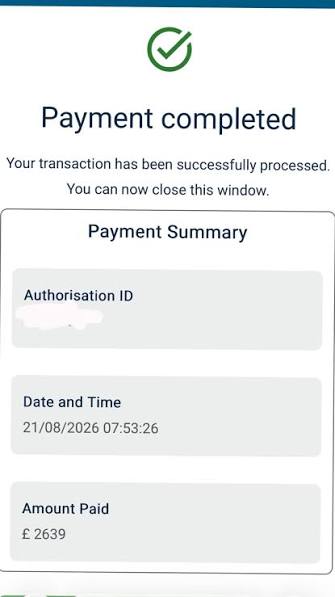
FINAL PAYMENT.
She probably meant it as a warning.
I read it as closure.
The video had taken twelve minutes to record.
Those twelve minutes recovered $2,600.
More importantly, they protected me from the version of the apartment Mrs. Denning created only after she had the keys and I was gone.
Next story: My deposit dispute ended with a recording. The next woman faced a worse problem: her roommate stopped paying rent, refused to leave—and then told the landlord a story that nearly got the wrong person evicted.